
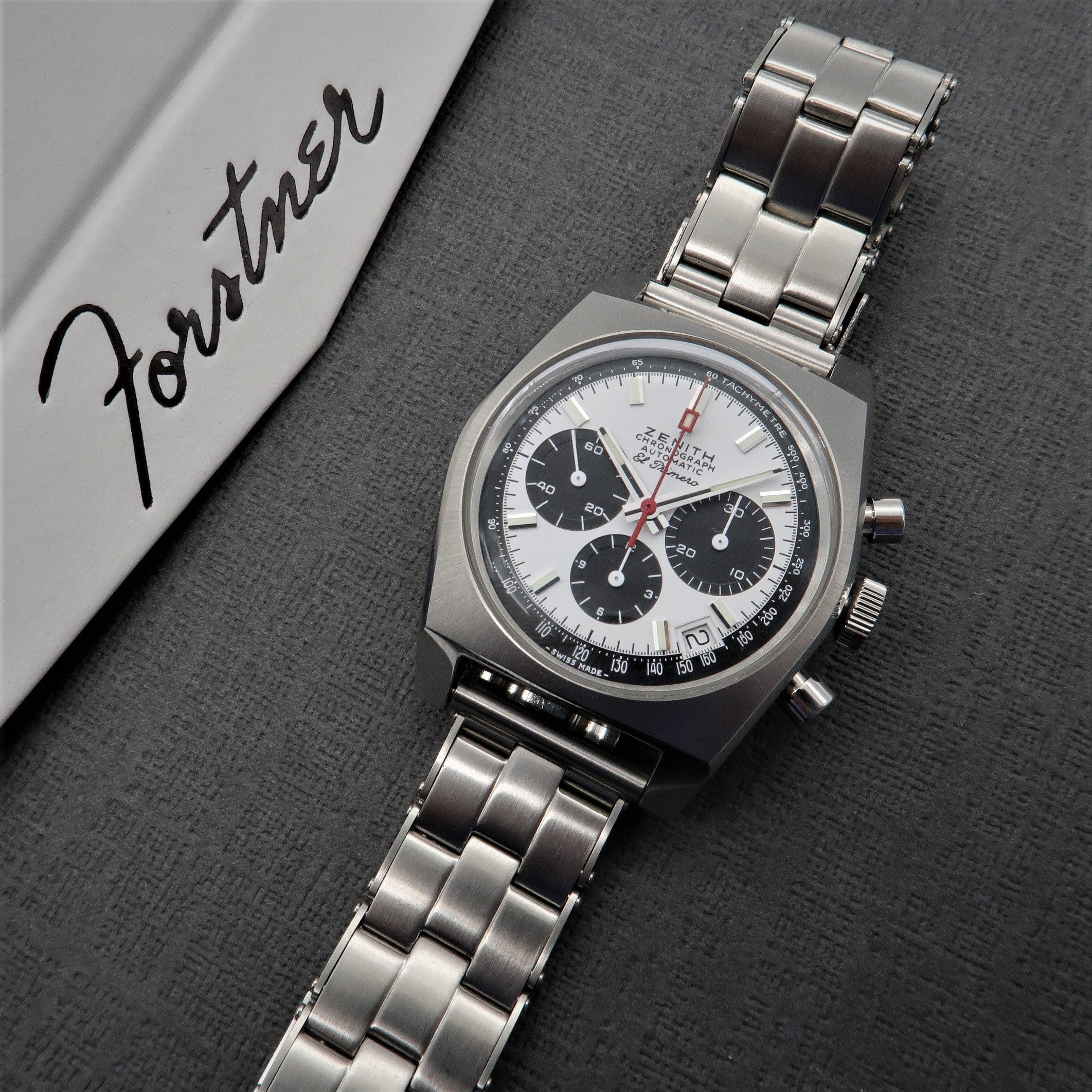
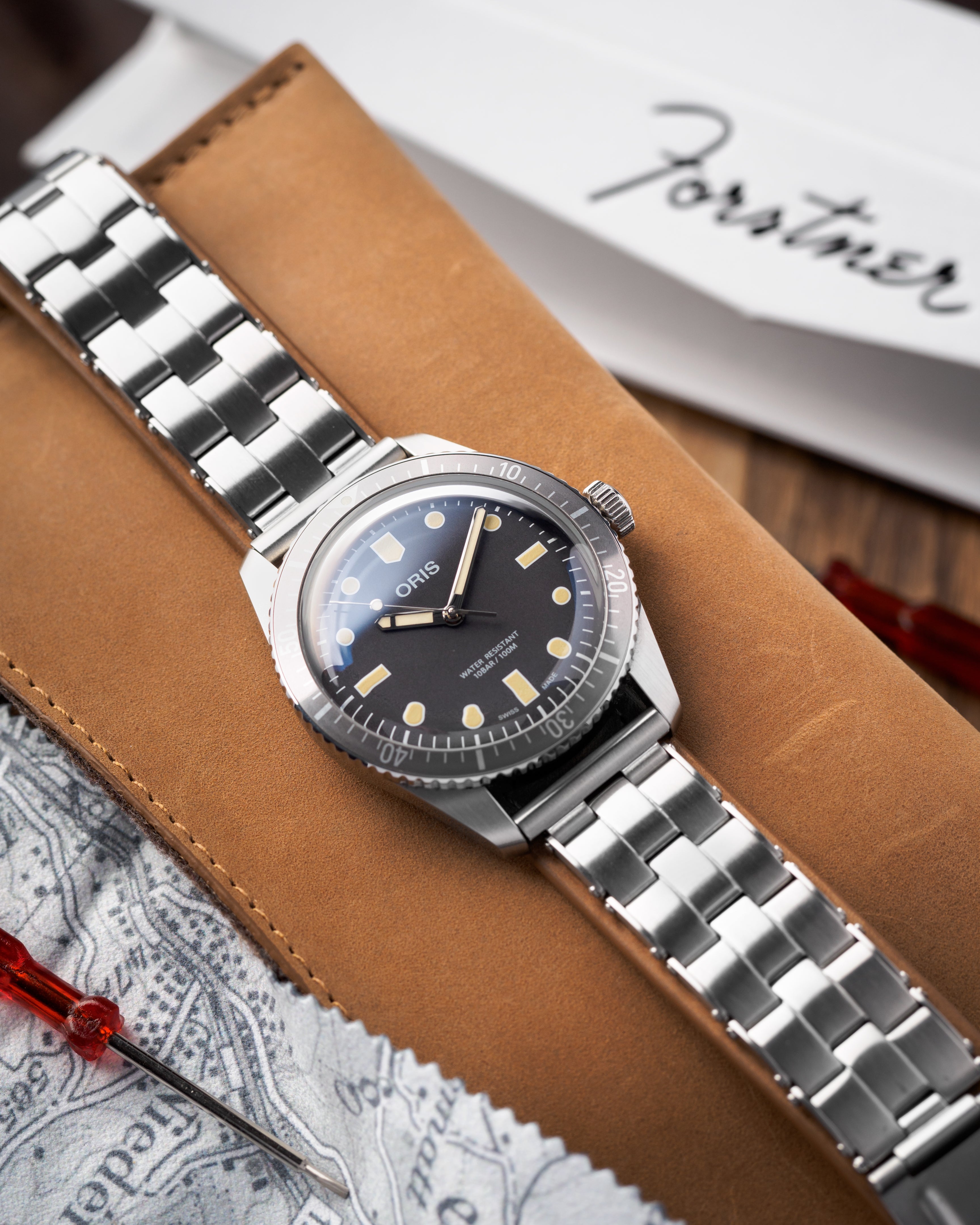
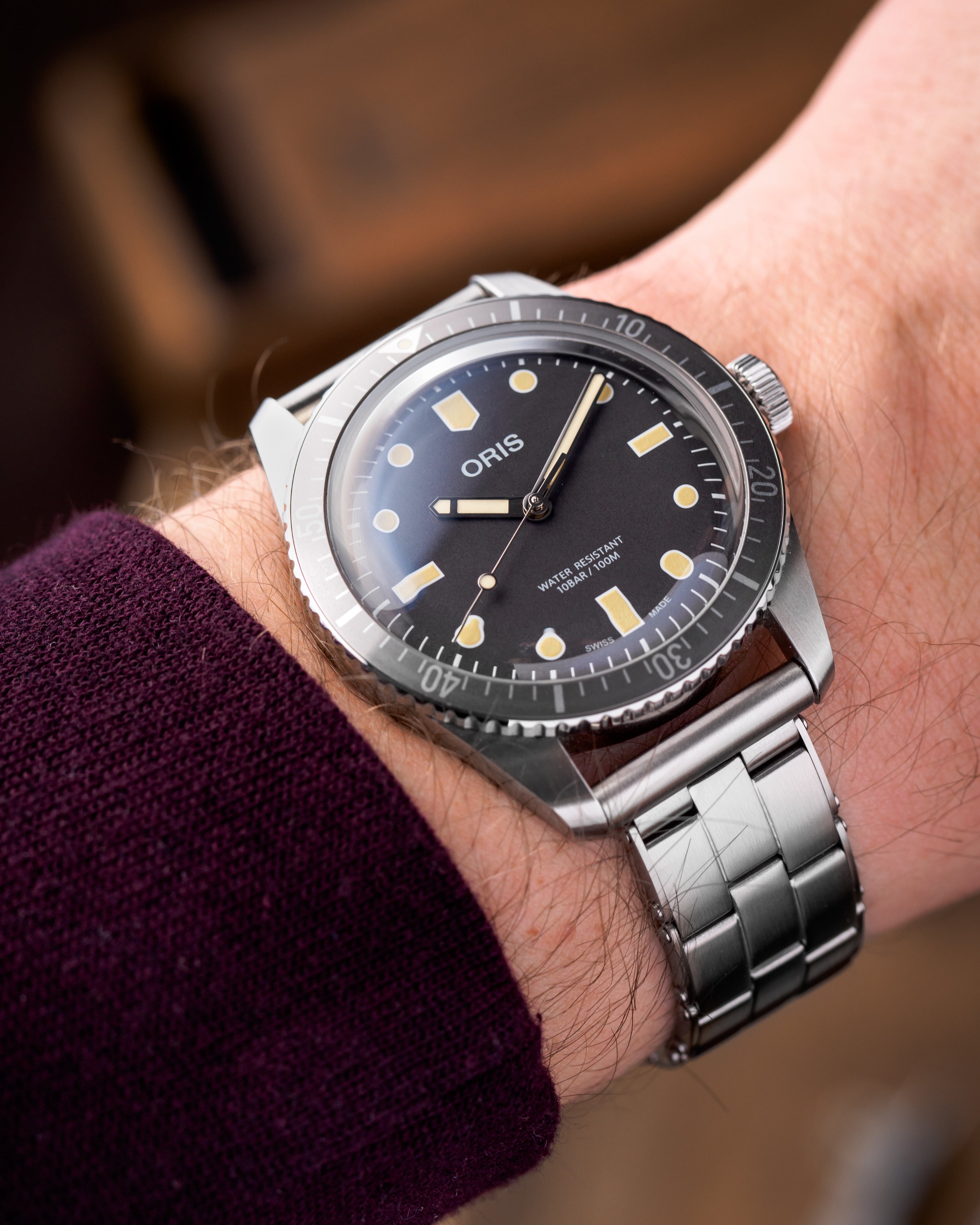
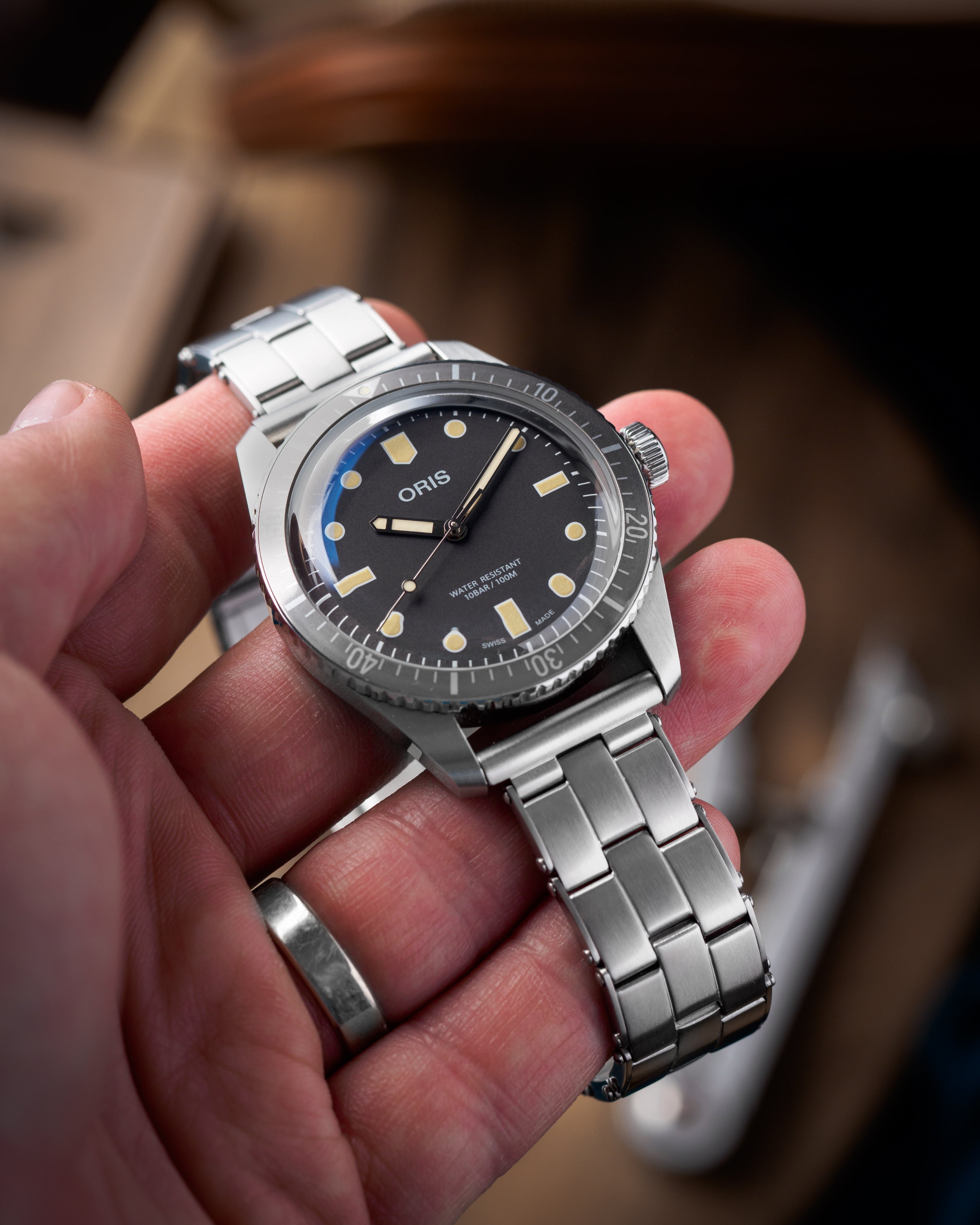
[Forstner] The [Forstner] Rivet Bracelet - Stretch or Solid Links

SKU: Z-FORSTNER-018-RBSOL1
Sale price$201.87 AUD
Size: 18mm
Finding your Strap Width

How to Find Your Strap Size

Not sure what size strap you need? There are three ways to find out - pick whichever is easiest for you.


1
Quickest method

Check the Back of Your Strap

The fastest way is to flip over your existing strap and look for a number printed or stamped on the back. A number like 22 means your watch takes a 22mm strap - that's all you need to know.

Strap size printed on the back of a watch strap

Most smartwatches will show 18, 20, or 22 on the back of the strap or on the underside of the watch itself. The number refers to the strap width - how wide the strap is where it attaches to the watch - not the overall length of the strap.

Can't find a number? If there's nothing printed on your strap, use Method 2 below to measure it directly - it only takes a minute.
2
Most accurate method

Measure the Lug Width

The lug width is the distance between the two metal prongs (lugs) on one end of your watch case - this is exactly where the strap attaches, and it's the same as the strap width you need to order.

Diagram showing the four lugs on a watch and where to measure

Your watch has four lugs - two at the top and two at the bottom. Measure between the two lugs on either end (the red line in the diagram above). Both ends will give the same measurement.

  • Lay your watch face-up on a flat surface.
  • Place a ruler or tape measure across the top set of lugs.
  • Measure the gap between the inner edges of the two lugs.
  • That number (in mm) is your strap size.
Ruler measuring lug width on a watch Two ways to measure watch lug width - ruler and tape measure both showing 22mm

Both measuring methods in the image above give 22mm - so this watch takes a 22mm strap.

Avoid phone camera rulers Camera-based measurement apps are often inaccurate enough to give you the wrong size. A 1mm error is all it takes for a strap not to fit - use a physical ruler or tape measure instead.
Why our straps measure slightly under size Our 22mm straps actually measure around 21.95mm - this is intentional so the strap slides cleanly into your 22mm lugs. This is standard across the industry.

If you're still unsure, you can also measure the top of your existing strap where it meets the watch (marked A in the diagram below). Don't measure further down - straps taper as they get longer, so you'll get a smaller number than you need.

Strap component diagram showing where strap width is measured
3
No ruler needed

Look It Up on Google

For popular watch brands and models, you can often find the lug width with a quick Google search. This works well if you know your exact model name or number - manufacturers sometimes change strap sizes between models, so the more specific you can be, the better.

Search for:

[Brand] [Year] [Model Name/Number] lug width

For example:

Rolex 2016 Submariner 114060 lug width
Daniel Wellington 2019 Cornwall lug width
Example of a Google search result showing lug width for a watch model

If the lug width search returns nothing, try replacing "lug width" with strap width - both terms are used interchangeably.

Got an odd-numbered result? If Google returns a 21mm lug width, a 20mm strap will still fit - there'll be a small 0.5mm gap on each side. You'll also need to reuse your original spring bar for the strap to attach correctly.

View common smartwatch strap sizes →

Construction: Solid Links

The Story

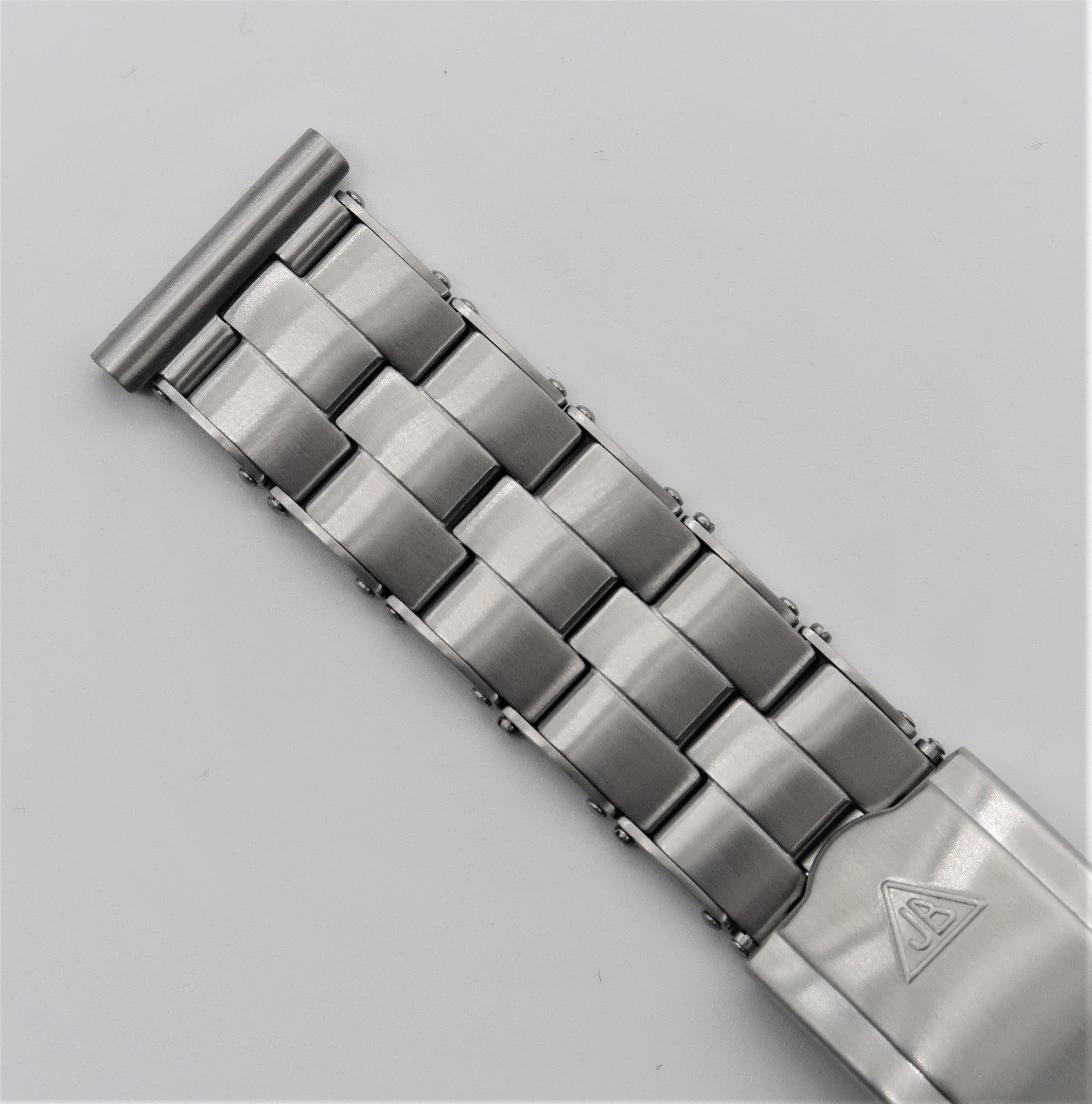
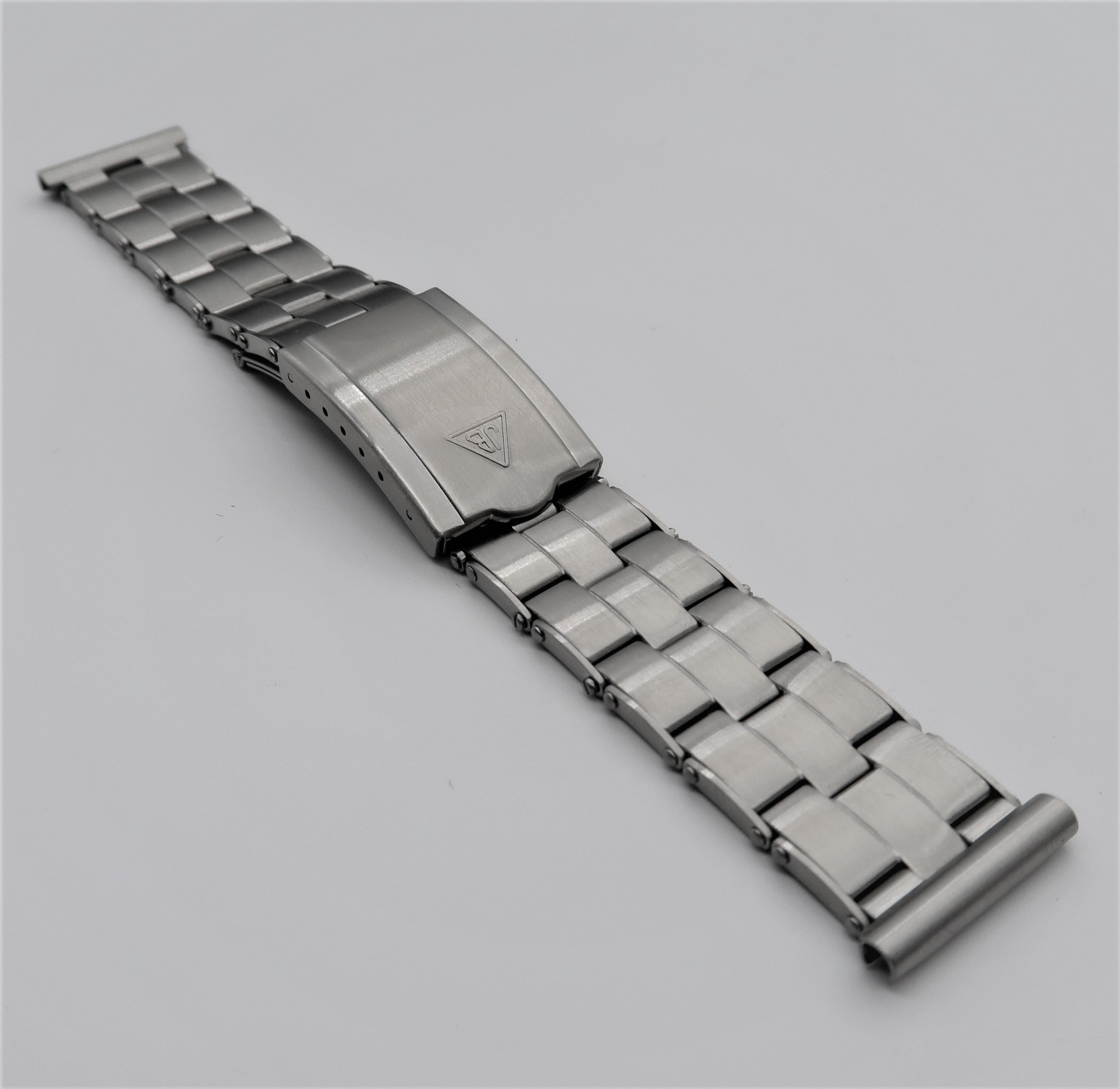
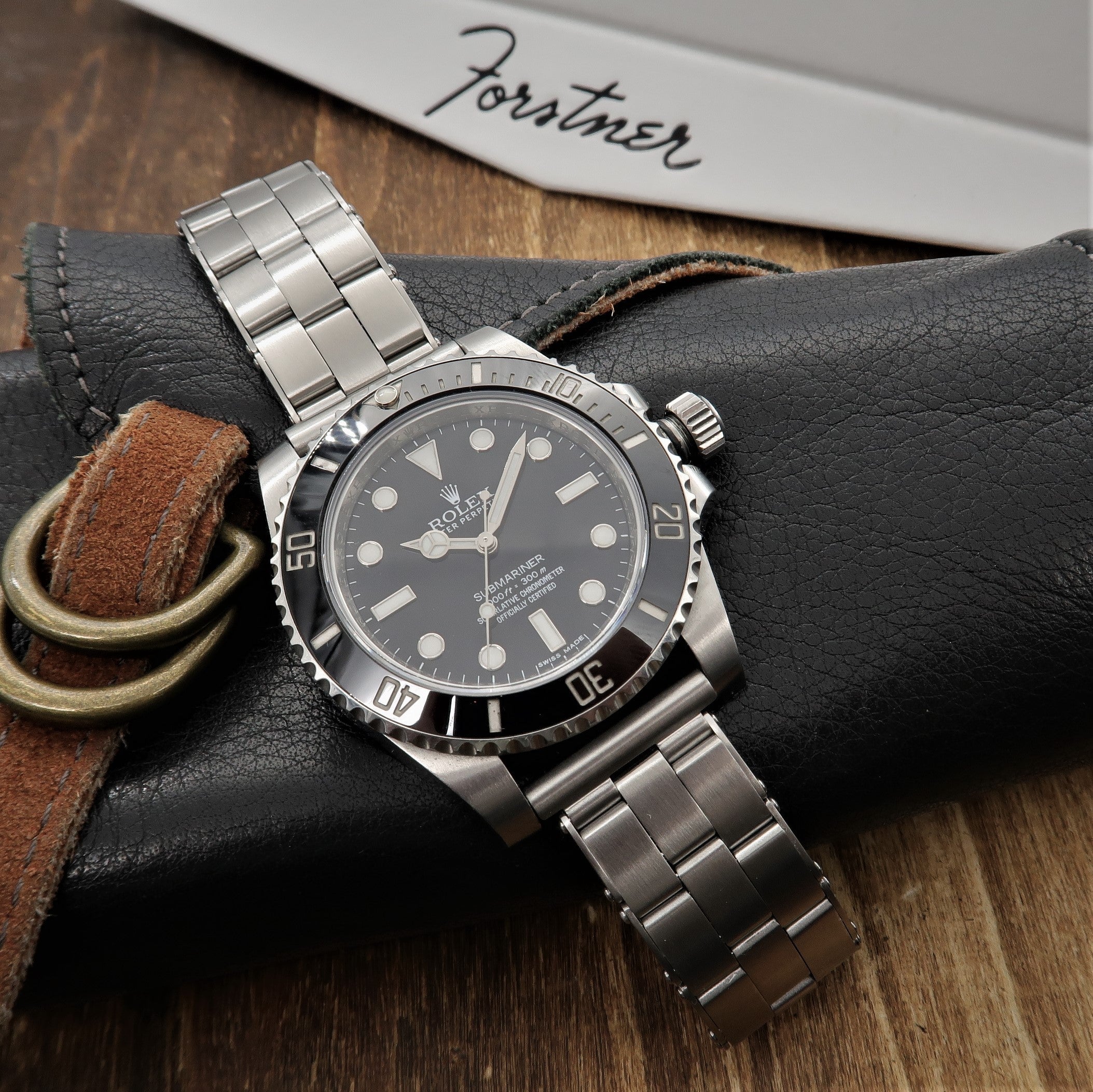
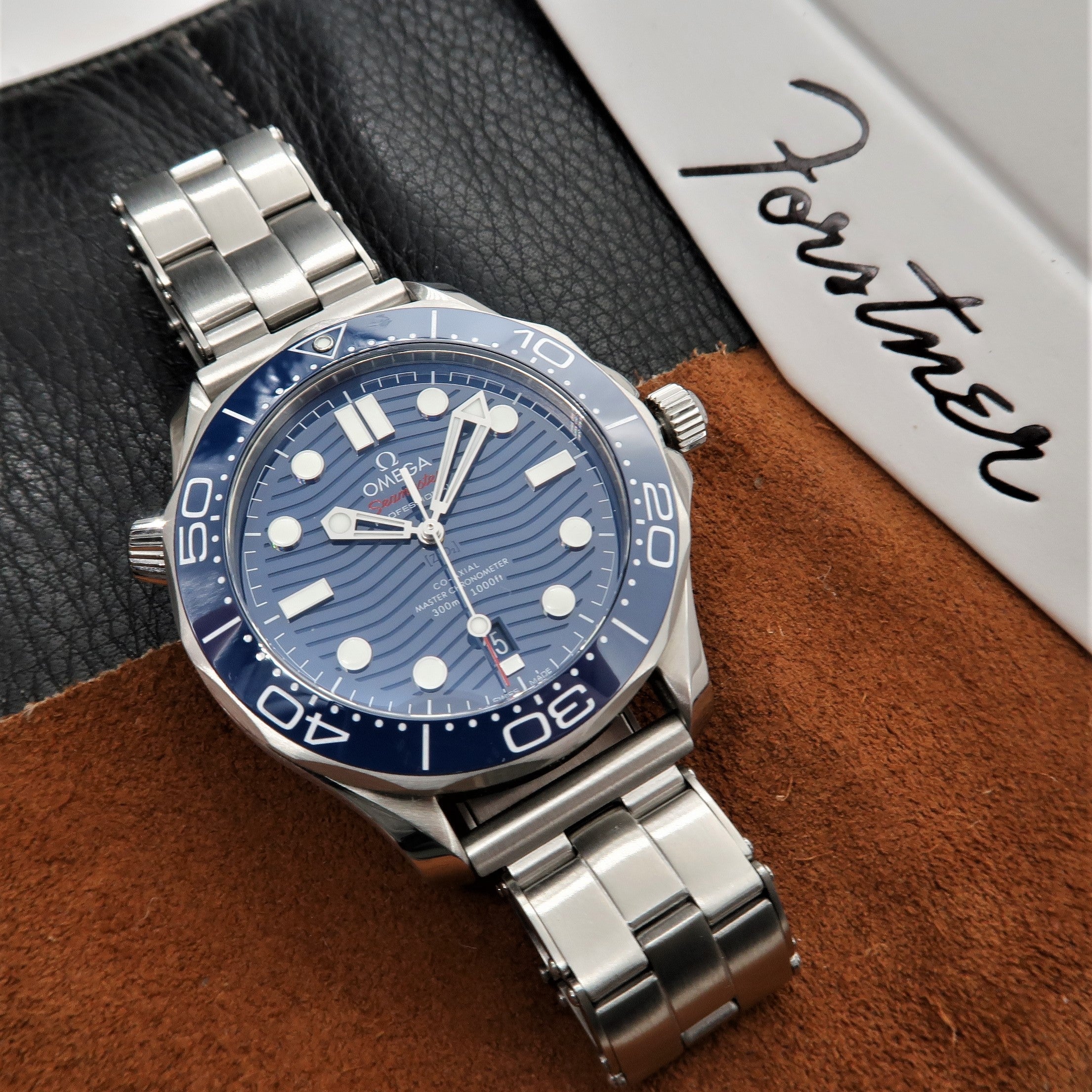
Arguably the precursor to the Oyster bracelet, the uniform (i.e., non-tapering) three-link rivet bracelet with straight end pieces is one of our favorite historical watch bands. Originally made by distinguished bracelet manufacturer Gay Frères in the mid-twentieth century, the bracelet had a ton of old school charm with its all elastic-link construction. Sadly, however, the bracelet was discontinued long ago, and vintage versions have become exceedingly rare and expensive. Honoring the beautiful vintage design, Forstner has created its own take on the classic rivet bracelet.

Details

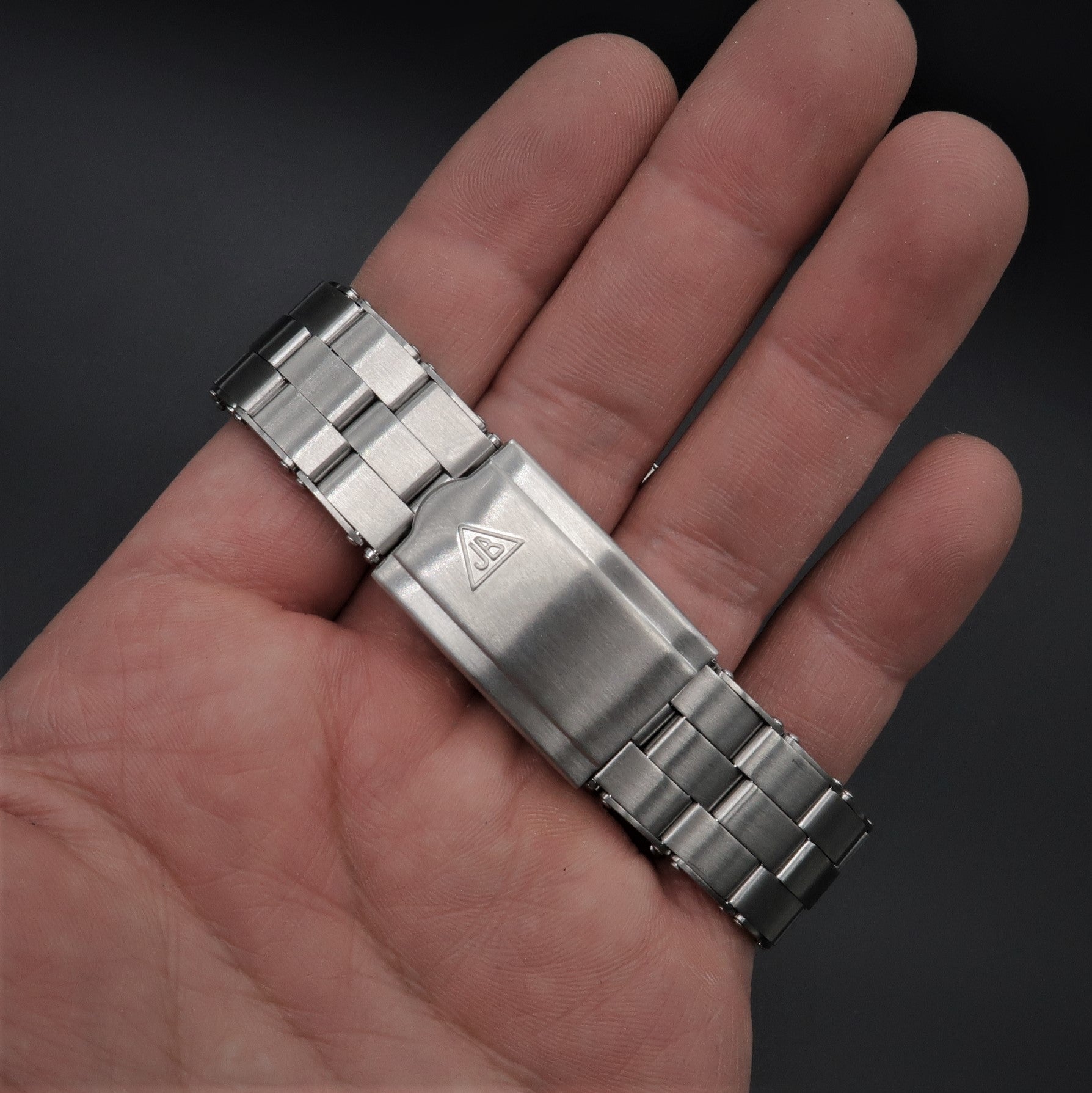
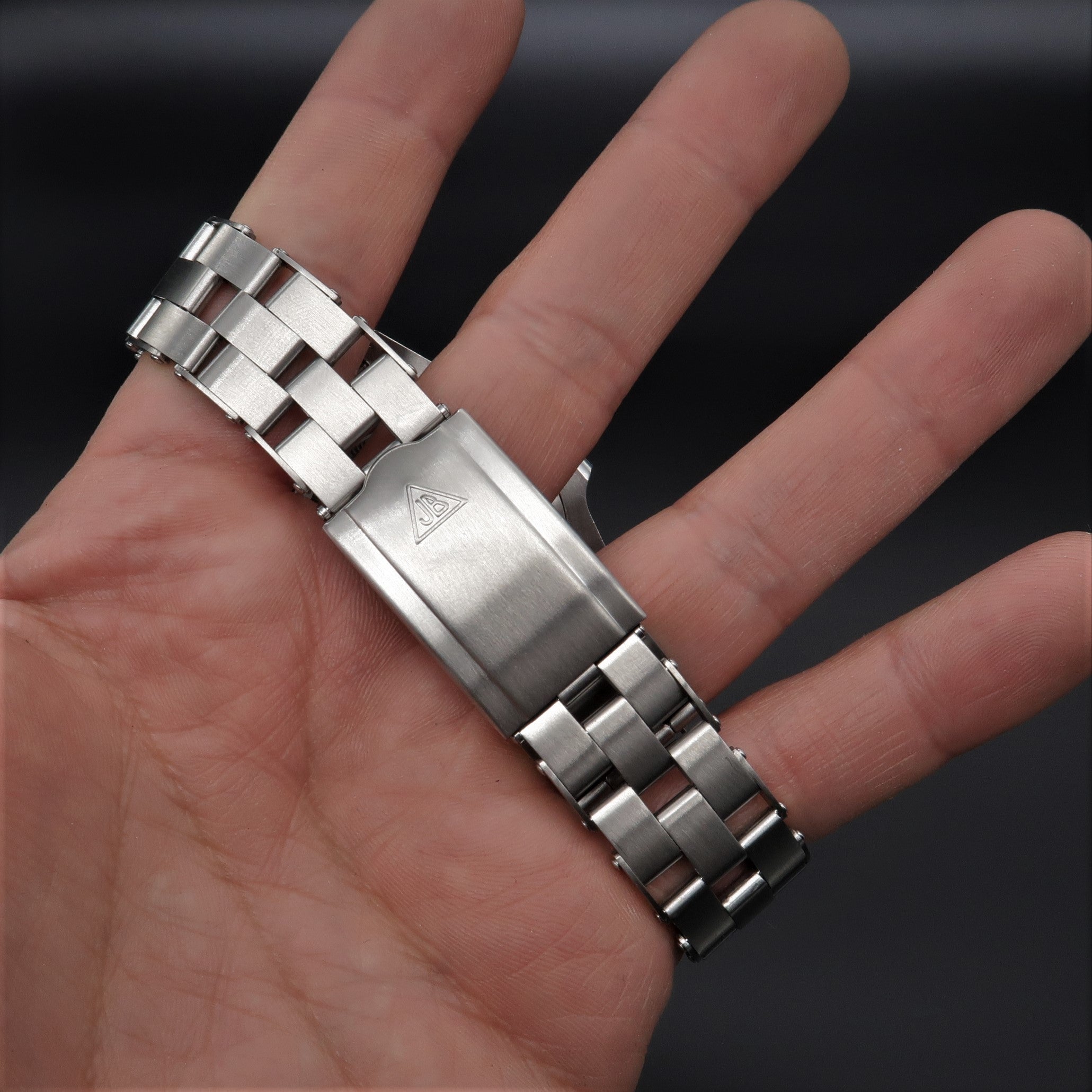
Forstner offers the present Rivet Bracelet in two different constructions -- one with solid links, and one all elastic (stretchy) links. Both versions of the Rivet Bracelet have the same essential design -- made of brushed stainless steel, the bracelet has an 18mm central "link" portion, with approx. 2.5mm thick links, and micro-adjustment on the clasp.

The Solid Link Construction

The Solid Link Rivet bracelet is constructed with links made of solid stainless steel (resulting in a heavier bracelet than the stretch version). Links are removable by screws, and further length adjustment can be made on the clasp. Fits wrists ranging from approx. 6-8 inches in circumference. Includes one elastic (stretch) link behind the clasp to ensure the bracelet can be worn comfortably throughout the day. End piece widths available from 18mm, 19mm, 20mm, 21mm, and 22mm.

The Stretch Link Construction

The Stretch Link Rivet Bracelet is constructed entirely of "stretchy" links, which can expand and contract as necessary. Length is also adjustable via the clasp. The Stretch Link bracelet has a lighter, more vintage feel compared with the Solid Link bracelet. Fits wrists ranging from approximately 6.25-8 inches (but snug fit over about 7.25 inches). End piece widths available from 18-20mm.

  • Note: if you prefer wearing bracelets loosely, the solid link version is likely the one for you, as you may remove the solid links to obtain a precise fit. The stretch version works best for folks who prefer a snug fit, as the bracelet expands to fit wrists over about 7.25 inches in circumference.

Included

Spring bars, screwdriver for size adjustment.

Shipping

FREE shipping over $30 AUD.
FREE International postage over $110 AUD.